

Start Here.
A call to think about injury nutrition in a different way.

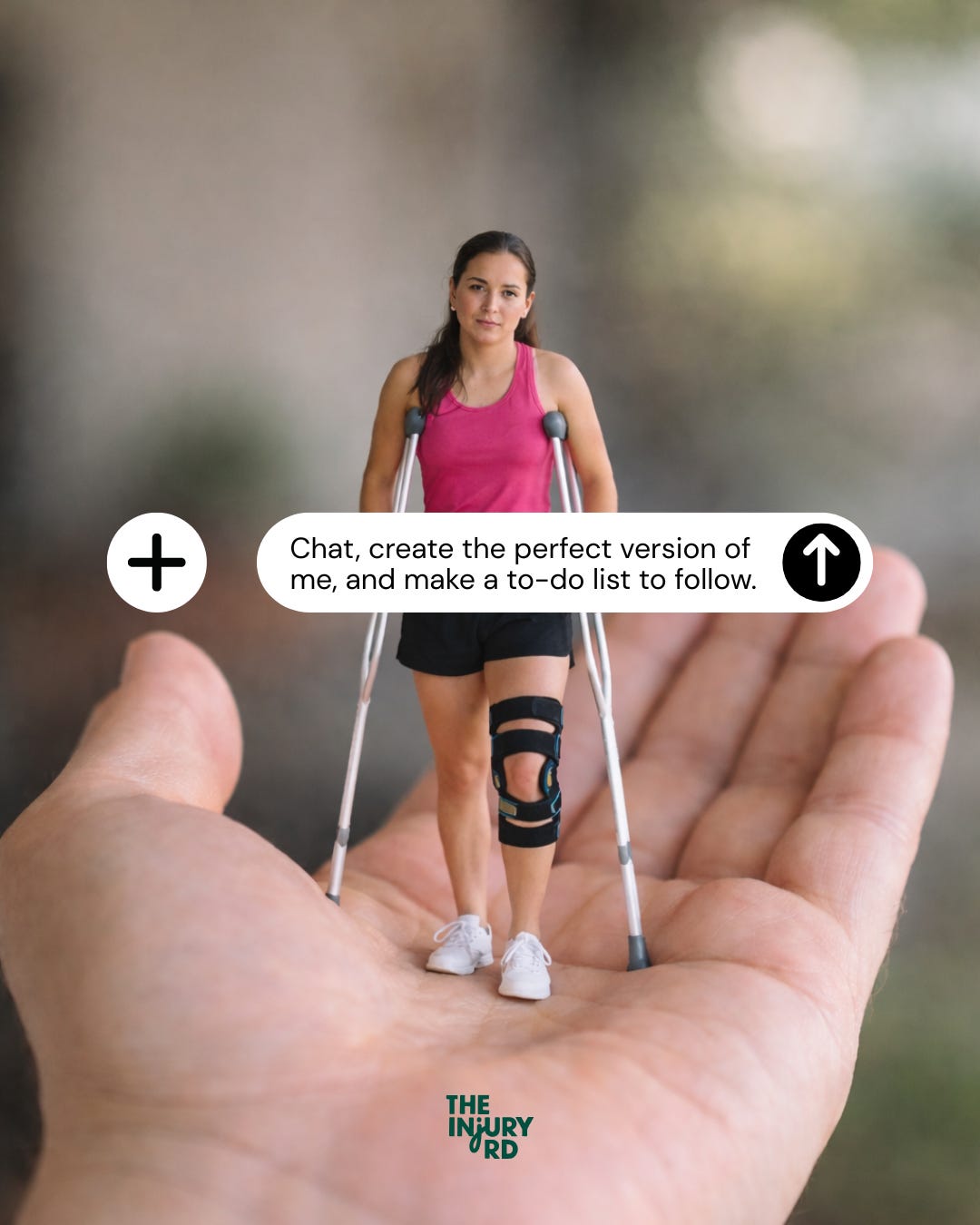
Research suggests injuries are a catalyst for change. They are a major life event that push people to care more about what they eat, or how they sleep, or become more consistent in the gym. The experience shifts something in people, and at the end of the day, many find a sort of begrudging gratitude for their injury. Of course they wouldn’t wish this on their worst enemy… but the experience played a leading role in shaping who they are. Athletes with an injury history almost always point to those times as when they learned about themselves outside of their sport. Could this also be an opportunity to learn more about how to care for your body beyond hitting your protein and fiber goals?
Most athletes I talk to perceive their injury as an invitation to change externally. Athletes focus on protein intake, but deep down they’re thinking: On the other side of this rehab, I’ll have a six-pack. On the other side of this rehab, I’ll be 15% body fat. On the other side of this rehab, I’ll be so hot, just you wait.
Rehab gives you an illusion of a specific bubble of time in which you can re-emerge like a phoenix from the ashes. Stronger, faster, hotter, better.
Then, they make grand plans within that daydream. After the initial shock, anger, and tears wear off, the search for the perfect method to reach the other side of metamorphosis begins. Athletes begin frantically … Googling.
It makes sense. The world was just turned upside down and an answer, any answer, would be nice. Facing the unknown feels a lot more comfortable with the knowledge that twelve random users on Reddit safely returned to sport after nine months, not twelve. The Facebook commenter lamenting about how much weight they’ve gained, and the subsequent 30 comments sharing the various ways their body changed won’t be you. That won’t be your experience. Once the Google searches get past the fear of pain, the timeline questions, the never-ending debate on which type of graft to use, and so on, at some point the search shifts to:
What should I eat after ACL surgery?
Or the underlying question…
How to not gain weight after ACL surgery?
I actually have an answer to that question, albeit a long-winded one dripping with nuance, but that is a post for a different day.
Today, I want us all to take a deep breath and hop on a short side quest to talk about Maslow’s Hierarchy of Needs.
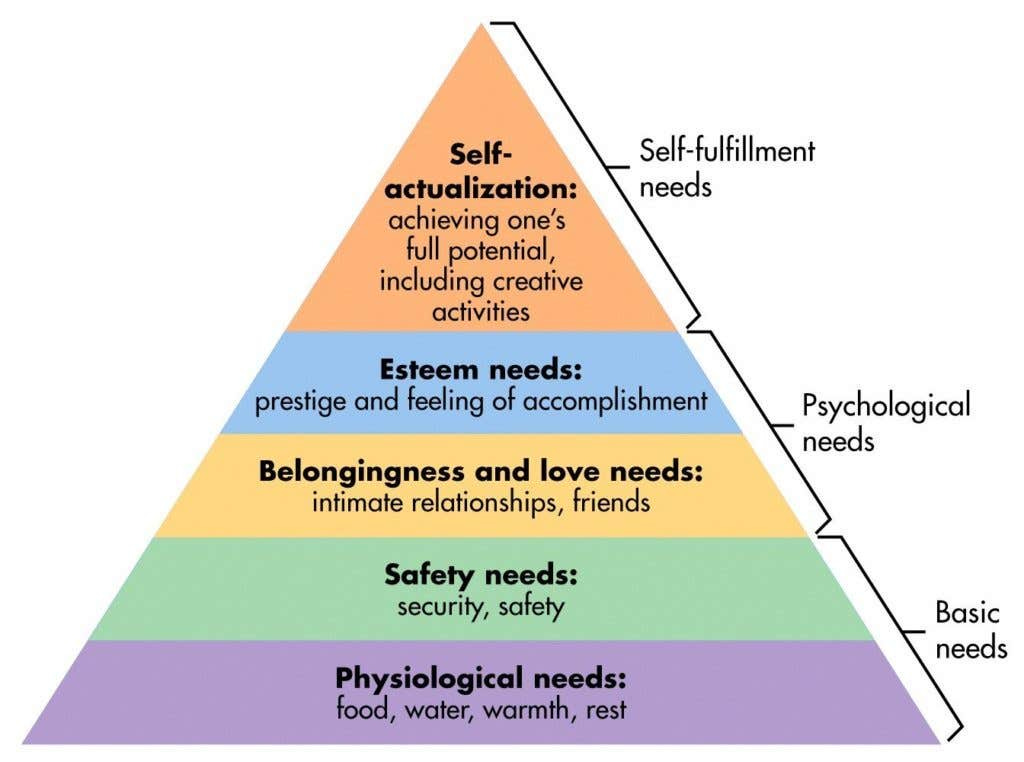
Your whole world just changed, and it’s important to reorient yourself to cover the bottom piece of the pyramid. From a nutrition standpoint, I want to answer all of these questions for you. What should you eat? How much? What are the most important tools to use? How do you get past the initial nausea? Etc.
We are going to do that! I have tons of tools for you. However… can I gently suggest that once we’re past the basics, there is more if you are interested?
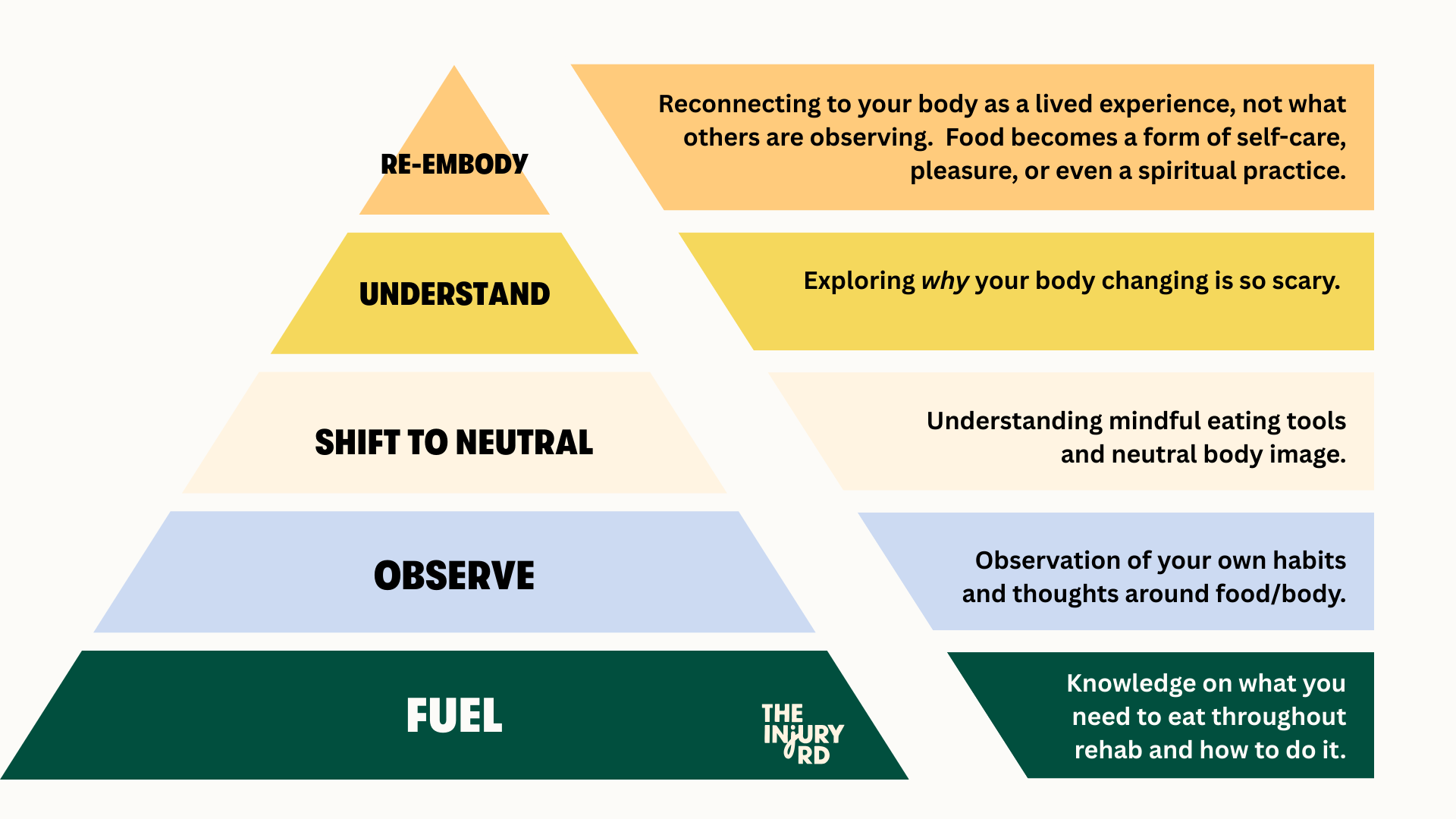
If I had to riff off Maslow from an injured athlete nutrition perspective, my pyramid would look a little something like this:
Fuel: Knowledge on what you need to eat throughout rehab and how to do it.
Observe: Observation of your own habits and thoughts around food/body.
Shift to Neutral: An understanding of mindful eating tools and neutral body image.
Understand: An exploration to understand why taking movement away feels so hard for you or why feeling in control of what your body looks like feels so important or why your body changing is so scary.
Re-embody: Reconnecting to your body as a lived experience, not what others are observing. Food can be a form of self-care, pleasure, or even a spiritual practice.
When you have safely moved beyond the chaos of those fundamental Google questions, are you willing to explore the rest?
What’s first?
If I gave you a list of foods that you “should” eat right now, do you think you would follow through? Why or why not?
Statistically, you would not. Not from a piece of paper telling you to eat this, not that. You might for a few days, but ACL recovery takes significantly longer than that, sorry to remind you.
If, instead, I helped you figure out why you wouldn’t follow through and gave you answers to get over those hurdles, that would be a much more useful tool for you. Maybe instead of just a list of foods, I gave you recipes. Or cheap recipes. Or Doordash options. Maybe I’d also help you understand how to include all your OTHER favorite foods and flavors. Maybe I’d help you get away from the “I’ll start Monday” mentality, or the “if it’s not perfect, then it isn’t good enough” voice. Does that sound more helpful?
Observing what feels sticky toward your goals not only helps you plan how to achieve them more effectively, but helps doing so feel a lot easier.
Next:
2. If I could give you a magical tool that numbs all emotions and thoughts around food and your body would you want it?
If that feels like it would be a breath of fresh air, then shifting could genuinely be a life-changing step for you. The goal is not to numb, but respond and quiet the negative voice.
3. What if rehab can simultaneously build toughness, resilience, and softness?
It’s fun to daydream about what the 2.0 version of you at the end of this rehab is like. Maybe they’re a better athlete, or they look different, or have different habits than your current routines. What if this daydream also includes a world in which you have a kinder inner monologue? A voice that doesn’t snap at you every time you get a craving for some ice cream? What if you become a person that genuinely loves what you see in the mirror, not because we have changed you externally, but because we have changed the way you see yourself.
There is an opportunity here to explore why you are so nervous to gain weight through this process (or whatever it is that’s making you Google what foods are best). You can turn that fear into understanding, and remove the power it’s holding over you. That gives you the freedom to better understand yourself, and then better care for yourself.
All of this alongside everything you are learning about how to read and care for your body in physical therapy, how to manage challenges you’ll face in life, and discovering your identity outside of sport or outside of activity is powerful stuff.
That’s a tool you get to carry and sharpen through life, which is FULL of challenges that will bring fear to how your body might change; pregnancy, post-partum, menopause, aging, and so on.
It’s also a tool you get to pass to the people behind you and around you. Self-kindness, especially around what we eat and how we look at ourselves in the mirror, is contagious. A world full of people that never show up to work on Monday and say, “Gosh I was so bad this weekend!” or look in the mirror and feel like skipping the party all together because they don’t like how their outfit looks? A world of people that can spend their lives exploring their passions, hobbies, friendships, and families instead of living in fear of how their body might change and how to eat to avoid that happening? Sounds like a great place to me.
Injuries can be life-changing in a really great way, and that can include the nutrition tools you learn through the process, too.
Each level of that pyramid is important, and I will have tools to meet you where you are no matter what.
If you are figuring out the bottom of your pyramid, yes, take the handouts and the Friday Menu Drops and give yourself some peace of mind that your bases are covered. At some point, I hope you feel the call to dig further. It can be life changing.
If you’re at the “what the heck do I do and how?” phase, Feed the Quad programming and Friday Menu drops will be helpful.
When you’re ready to dive a bit deeper, The Body Positive programming or one-on-one support are great places to start.