
New? Start here!
Where to access all meal ideas, free resources, deep dive series, and 1:1 support.

Hey there! If you are dealing with an injury and looking for guidance around nutrition, food noise, and body image, I’m so honored to support you. ♥️ Feed the Quad is where I get to provide a little more TLC that you need during this time. Injuries are tough. You don’t need food to be an additional stress!
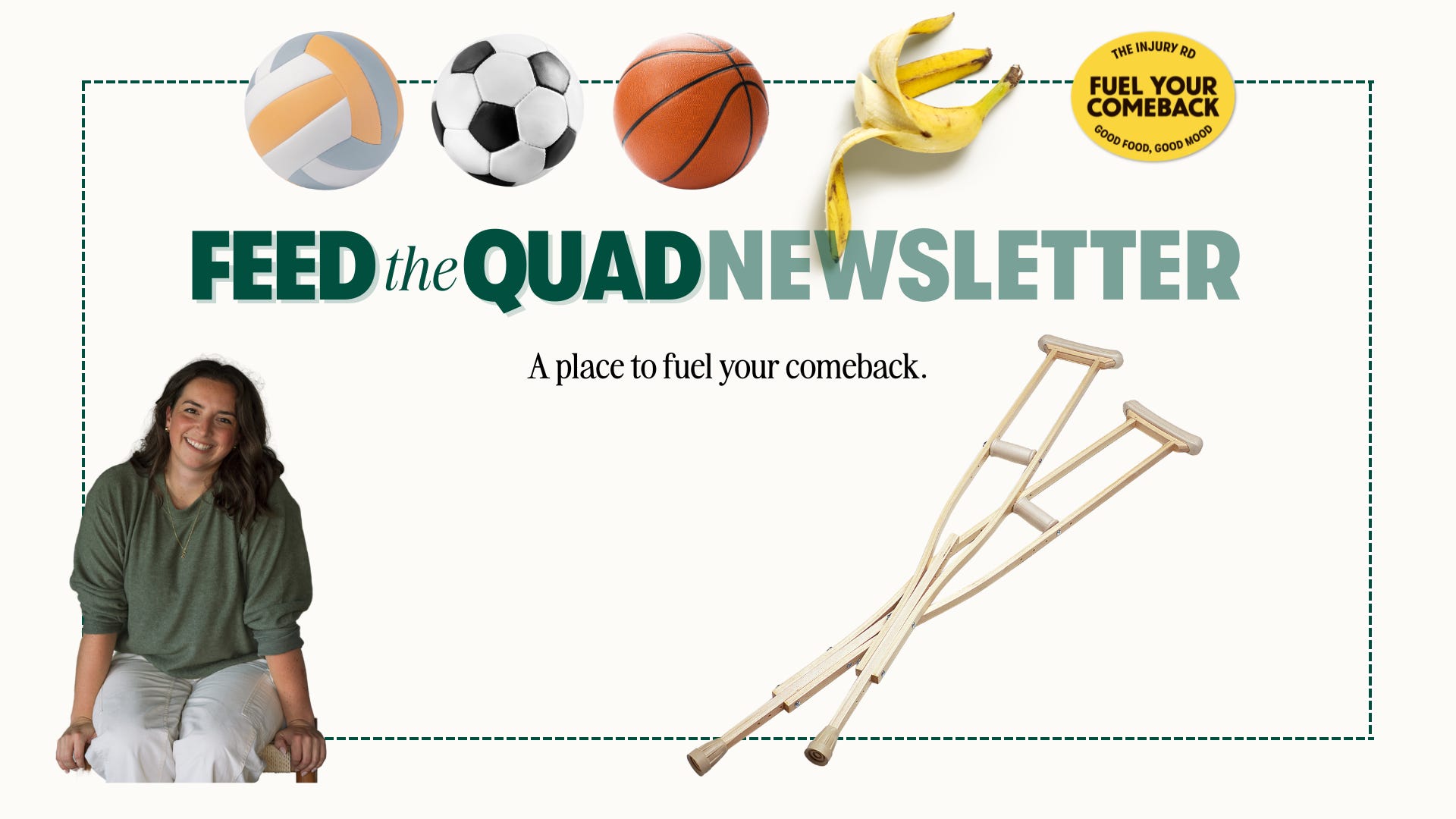
I’m Emily, your sports dietitian. I’ve had a soft spot for injured athletes since 2021, a story you can read more about here if you’d like. I’ve been connecting with sports medicine providers, fellow dietitians, and (most importantly) the athletes and individuals we all care for ever since.
You are currently at the heart of everything I’ve made for rehabbers.
You’ll find most of these resources through an ACL/knee lens, but I’ve worked with almost every bone and ligament injury you can think of. All are welcome, and from a nutrition point of view, all is easily tweaked to your situation. Long story short, I’m here to
make food an asset in your injury recovery, not an added stress
help you build confidence in your food choices during this crazy time
encourage you to use your time in rehab as a catalyst toward body kindness and confidence
connect you with community
and I suppose most importantly, help you figure out what’s for dinner! (Despite post-op nausea, your crutches, the world telling you you’re not moving, so you should eat less, your decision fatigue, budget concerns, and everything else you’re dealing with!)
The Feed the Quad newsletter is here to guide you through every stage of rehab. It’s about so much more than “eat this, not that” - a philosophy you can dive deeper on here.
Friday Drops: ✨ free content ✨
Here, I’ve taken some of the mental load off your plate. You’ll find a breakfast, lunch, dinner (or two), and snack idea for the week ahead, plus a grocery list.
The majority of these recipes are “three-limb friendly”, meaning you won’t have to stand in your kitchen for hours, and should be able to handle it if your arm is in a brace. The theme is easy.
Recipes are also categorized into your rehab performance plate with more information on the nutrients and portion sizes you (most likely) need based on your phase of injury.
You can find the full Performance Plate guide included in the subscriber content, or below.
What is the “full” Feed the Quad program?
Feed the Quad is a 6-step nutrition program packed with ALL the tools you need to support your ACL rehab.
I’ve run this as a group program since 2024, and now I’m bringing it here to Substack so you can access it when you need it. No more waiting for a start date, and the opportunity to take everything at your pace.
How does it work?
Upgrade to a paid plan to get access to every resource.
Receive 1:1 check-in forms with Emily at a pace that makes sense for you. (Typically weekly at first, then monthly later.) Emily will provide extra resources and guidance for you, track progress, and provide the individualized care you deserve.
Participate in the live monthly Q&A call for face to face support.
Participate in community challenges and chats and connect with other athletes.
What’s inside?
The tools you need in a form you can digest.
We both know you don’t have time to watch a 60-minute zoom recording. That’s why that’s not what this is. I also know that getting access to 100 different resources all at once feels like trying to drink water from a firehose. It’s overwhelming.
Instead, each week has a very purposeful theme (one thing to focus on!) and quick 5-minute lessons that you can listen to during a car-ride, rehab stretches, etc. More on those themes below.
The community you’re craving.
Everyone here has done what you’re doing. See all the questions they’ve asked (and I’ve answered) on every post. Connect in the community chat. And take a deeper dive together with options like partner check-ins, community challenges, mentor/mentee guidance, and more.
One-on-one support with Emily
This is the most important part. You’ll receive weekly check-in chats (via private message) with Emily to make sure you’re geting everything you need from this program. That could be more support with mindful eating, body image work, clearer meal and portion guides, or any other questions that come up.
What will I learn?
Step 1:
What are the right calorie and macronutrient goals for you? How do you hit them without counting?
Step 2:
How to hit your protein goal without losing your mind. Plus other tools that can help you rebuild muscle.
Step 3:
Understanding your barriers and values. This is the most important step. This is how we make nutrition feel easier and how we quiet that second-guessing critical voice in your head.
Step 4:
Tools in your toolbox. Nutrition tools for setbacks, swelling, etc. A method to help you tailor your needs so it doesn’t have to feel like you need to do all the things all the time.
Step 5:
Sports Nutrition 101. Learn what you need for your sport and your goals. Return-to-play is the perfect time to practice this.
Step 6:
Myth busters and next steps. Find out what you need for clarity. Is this a better understanding of why some researchers believe seed oils are the devil and others say they’re great for heart health? Is this more clarity on how to improve body image or understanding cravings and hunger cues?
How does this improve my rehab?
Nutrition done well in the first stage of rehab can limit muscle loss, giving you a smaller deficit to climb out of later. (Great nutrition will not make this go faster. Poor nutrition can make this rehab go slower.)
Consistency is key. Together, we’ll build nutrition skills that are easy to sustain. Nutrition you don’t have to overthink doesn’t only feel good for life, but helps you make steady progress alongside rehab, too.
Over and over again, I see athletes use nutrition as a source of control or comfort during rehab, then beat themselves up about that path 3-months down the road. The tools we build together provide confidence around the uncertainty of what is to come. I cannot tell you what will happen, but I can tell you what we can do right now that is best for your health, your rehab goals, and your fears about this whole process.


What have past rehabbers said?
“The compassion & empathy you show to your clients is one of the biggest strengths of your program! And being told what we can add rather than what we have to take away & being empowered to make our own choices.”
“I learned in 10 weeks things that would have taken me months, if not years of trial and error to learn!”
“I think all of the resources are great. They are relatable and easy to understand.”
“The rehab process is such a roller coaster & it was so helpful to have an objective outsider’s perspective.”